
By: Selina Pedi-Smith, Pellere Foundation
The question we left off with last week was “How do we create communities where differences don’t immediately divide, and where connection is intentional, not accidental?”
I ask myself this question so often. Especially after watching the news, which, frankly, I avoid. I prefer to read my news rather than watch it, so I don’t get so triggered!
That, though, might be part of the key, now that I say it out loud. Finding ways, offering ways, normalizing all sorts of ways, to share and inform that are wired for nuance and context, not drama or ratings, so that people can get information in ways that don’t trigger big, explosive emotions. And that, well…that requires time.
Many cable news programs, many magazines, and even gossip over the garden fence…those are all designed around grabbing people’s attention quickly and holding it as long as possible with big, loud, flashy and salacious information of questionable validity. We’re taken in by the noise and emotional triggers, and before we know it we’re shouting at the tv, or arguing with our spouse over something that we didn’t even know about and couldn’t have cared less about five minutes earlier!
But when information and ideas are shared thoughtfully, more slowly…there tends to be less emotional reactivity. And, like you said, there’s time to pause, to breathe, to ask the universe for a little extra patience if needed. To really think about what’s being said. To think about how we feel about that. To think if we even need to form an opinion or respond. We aren’t immediately triggered into reacting. And that’s…quietly powerful to even think about, isn’t it? It feels like the antithesis of chaos and reactivity.
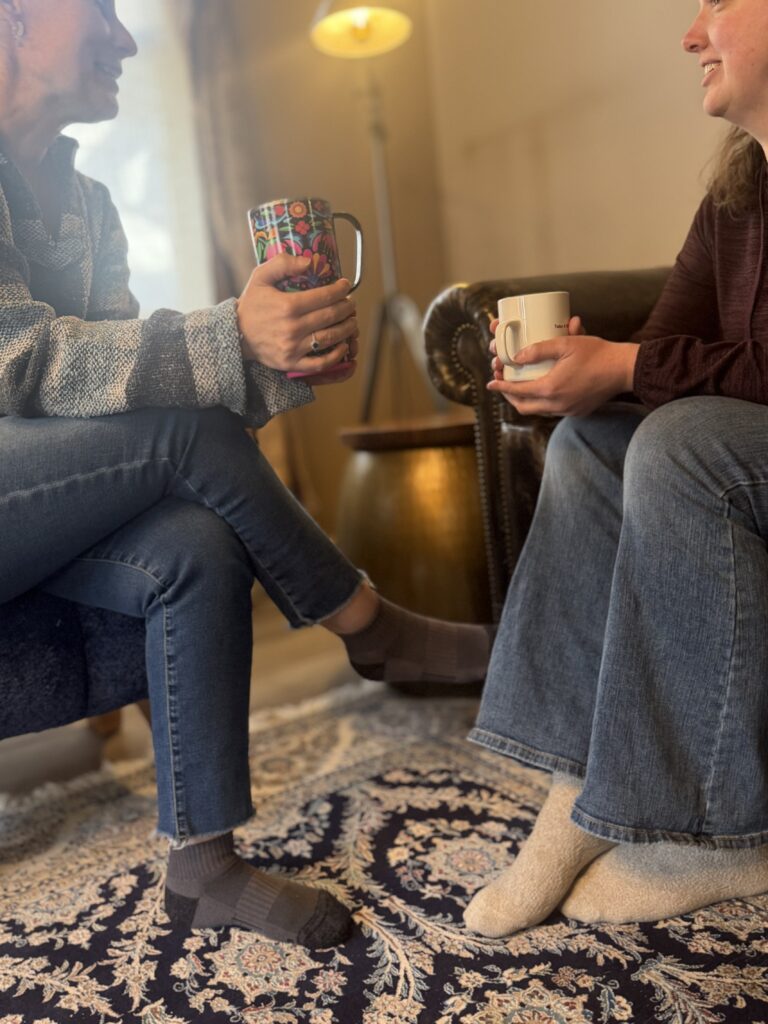
So, honestly, I think communities need more coffee shops!
I love that! (As long as they have good tea too.)
But maybe the spaces already exist—coffee shops, kitchen tables, church foyers, front porches. The question is whether we are using them as places for thoughtful conversation. Spaces where conversation isn’t rushed, monetized, or weaponized. Places where questions are allowed. Where someone can say, “Help me understand,” instead of immediately picking a side or silently erasing themselves.
Maybe it just starts with something beautifully ordinary: sitting across from someone instead of typing at them. Asking one more question before giving your opinion. Pausing a second to check that spike in blood pressure. Maybe it starts with choosing a real conversation instead of the comment section.
I don’t think that communities are built by grand gestures nearly as often as by small, repeated choices. If anger can be a barometer, then this kind of connection can be a practice. If difference doesn’t have to divide two people in conversation, then it doesn’t have to divide a neighborhood either. And if we don’t have to fix everything, but take our own passions and make a small difference where we can—that’s how we create change.
👉 Want to help us rethink what redevelopment can look like—together? Follow the conversation and share your thoughts with us on Facebook and LinkedIn, or reach out directly to rachel@riverrootsredevelopment.org. We’d love to hear from you!
🔗 Looking for more ways to connect? Our Linktree has all the good stuff in one place: blog updates, community polls, upcoming events, and more.
📝 Curious about how we’re building change from the ground up? Explore more stories, insights, and updates on our blog: riverrootsredevelopment.org/blog.

